Build digital skills. Share what works.
skillNest connects learners, educators and FabLabs through practical workshops, RE/UP programmes and shared experience across Europe.
How do you want to use skillNest?
For learners, students, employees and makers
I want to learn and create
Find hands-on workshops, develop practical digital manufacturing skills and connect with labs and experts.
- Discover workshops and RE/UP programmes
- Find a FabLab near you
- Learn skills you can use in real projects
For FabLabs, educators and training teams
I teach or work in a lab
Explore how other organisations design practical training, discover programme formats and connect with experts across the network.
- Explore RE/UP programme approaches
- Discover labs and their expertise
- Find educators and industrial experts
- Share your own experience
Representing a company or institution?
Identify a skills gap, propose an industry challenge or collaborate on a training programme.
Recommended for you
Current opportunities across the skillNest network.
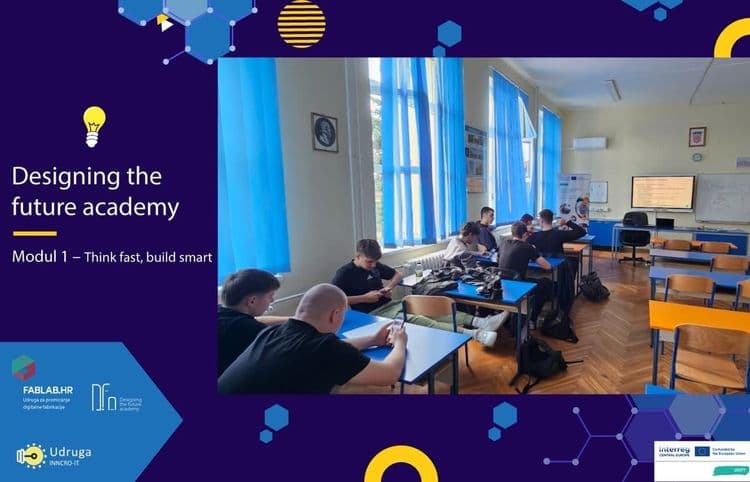
Think fast, build smart (DFA 01)
FabLab Zagreb/ Croatia
Lecturer: Roberto Vdović, Roko Lukenda
This module guides learners from a recognised real-world problem to a first concept solution. Through the design thinking process — understanding the user and the problem, generating ideas and sketching an initial prototype — participants work in pairs or small teams on a real everyday problem, define the user, goal and solution idea, and build an early mock-up from cardboard or other secondary materials. The workshop is designed as an accessible entry point with no formal prerequisites, built on the principle that the problem being solved always belongs to someone else — a person, a community, or the environment — never to the learner.
Target: Unprivileged

Vibe Coding is an AI-supported approach to software development where users collaborate with AI assistants to create digital solutions more efficiently. This workshop provides a practical introduction to building web-based prototypes with modern AI tools. Participants set up Visual Studio Code and use AI coding assistants such as Continue with OpenRouter, Codex, or Claude Code to generate, improve, and debug code. They create their own website using HTML, CSS, and basic JavaScript, test and refine their projects, and publish them via GitHub Pages. The workshop also covers best practices for AI-supported development, including effective prompting, iterative testing, error analysis, secure handling of API keys and private data, and testing applications across different devices.
Target: Other
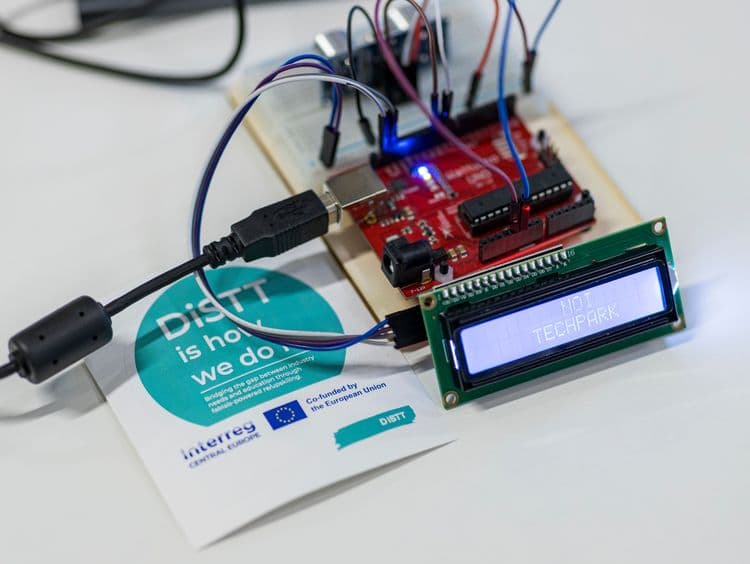
Microcontrollers turn a passive object into one that senses, decides and reacts. This one-day course builds the foundation needed for that: electrical quantities and Ohm's law, reading and building simple circuits, the Arduino board and its programming environment, and the interplay of sensors, code and actuators. It is designed for people with no previous experience in electronics or programming. The first part of the day works from theory to the first working circuit. After a short introduction to the platform, participants cover voltage, current, resistance and power, then identify the components in their kit and their schematic symbols. They build an LED circuit with a series resistor on the breadboard by hand, size the resistor themselves, and extend the circuit with push buttons in series and in parallel to see logical AND and OR behaviour physically before it appears in code. The second part moves to the board. Participants install the development environment, upload a first sketch, and work through digital output, digital input with pull-up resistors, analogue input, PWM, servo control, and light and distance sensing. Libraries are introduced through real components — a temperature and humidity sensor, an addressable LED strip and an I2C display. Every topic has a base exercise and an optional harder variant, so beginners and faster participants progress at their own pace. The day closes with an open block in which each participant designs and builds a small device of their own from the kit. All hardware is provided.
Target: General
How skillNest connects the ecosystem
From an identified skills gap to a practical outcome — every workshop on skillNest traces back to a real need.
Need
Companies and labour-market stakeholders identify a concrete skills gap.
Programme
Partners design a RE/UP programme package to address it.
Workshop
The programme is delivered as hands-on workshops in a FabLab.
Practical skills
Participants leave with skills they can apply immediately.
About DiSTT
skillNest is built as part of DiSTT, an Interreg Central Europe project developing shared digital upskilling and reskilling programmes across five countries. Six partner FabLabs designed and piloted the RE/UP programmes you can explore here.
Stay Connected
Help us shape the future of skillNest by sharing your thoughts and stay updated with our latest news.
Join Our Newsletter
Get the latest updates about workshops, programs, and opportunities in digital fabrication delivered to your inbox.
Subscribe NowShare Your Feedback
Your insights help us improve and develop features that matter most to our community.
Give Feedback