
Build digital skills. Share what works.
skillNest connects learners, educators and FabLabs through practical workshops, RE/UP programmes and shared experience across Europe.
How do you want to use skillNest?
For learners, students, employees and makers
I want to learn and create
Find hands-on workshops, develop practical digital manufacturing skills and connect with labs and experts.
- Discover workshops and RE/UP programmes
- Find a FabLab near you
- Learn skills you can use in real projects
For FabLabs, educators and training teams
I teach or work in a lab
Explore how other organisations design practical training, discover programme formats and connect with experts across the network.
- Explore RE/UP programme approaches
- Discover labs and their expertise
- Find educators and industrial experts
- Share your own experience
Representing a company or institution?
Identify a skills gap, propose an industry challenge or collaborate on a training programme.
Recommended for you
Current opportunities across the skillNest network.

Introduction to CNC Shaper – Digital Woodworking & Computer-Aided Manufacturing
brigk Makerspace/ Germany
This workshop provides a practical introduction to CNC-based manufacturing using a CNC Shaper. Participants learn how the mobile CNC cutting system works and explore its applications in woodworking, product design, prototyping, and maker projects. After an introduction to CNC technology, machine operation, and essential safety procedures, participants create or adapt a digital design and prepare it for machining using CAD and vector-based software. In the practical session, participants manufacture their own project with the CNC Shaper, gaining hands-on experience in material preparation, machine setup, and precision machining. Throughout the workshop, they follow the complete workflow from digital design to finished product. Example projects include: • Creating a personalized wooden sign or logo • Manufacturing a small furniture or design element • Engraving a customized workpiece • Developing a simple prototype
Target: Other
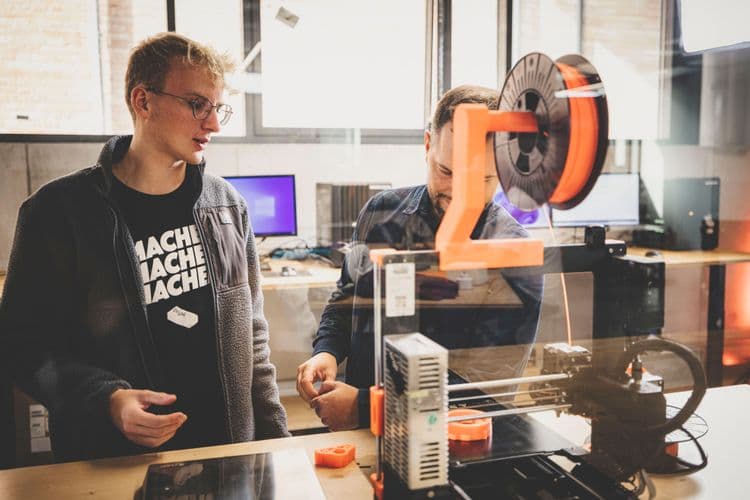
Introduction to 3D Printing – From Digital Design to Physical Prototype
brigk Makerspace/ Germany
This workshop provides a practical introduction to 3D printing as a modern manufacturing technology. Participants learn how additive manufacturing works, where it is used, and what advantages and limitations it offers for prototyping, product development, and customized production. Following an introduction to 3D printing technologies, materials, and safety considerations, participants create or modify a simple 3D model using CAD software. They learn how to prepare models for printing, including slicing, selecting print settings, and understanding how different parameters influence print quality. During the practical session, participants prepare and start their own print while gaining insight into the complete workflow from digital design to finished prototype.
Target: Other
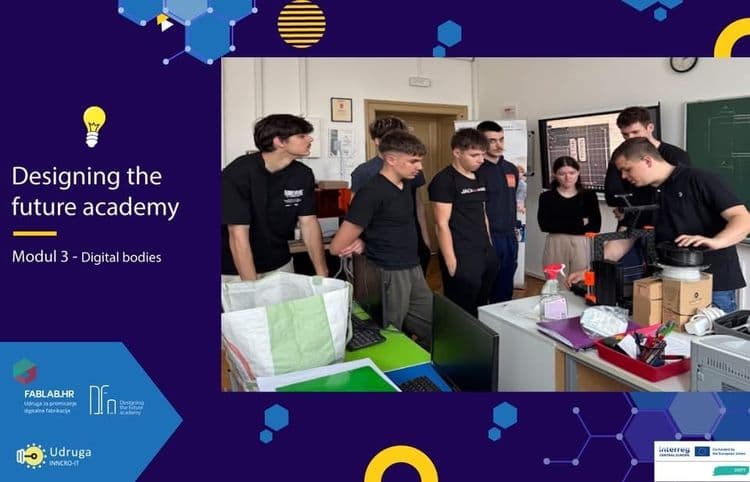
This module introduces students to 3D bodies, 3D technologies, and the basic process of turning an idea into a digital and physical 3D model. Through presentation, demonstration and hands-on work, students learn the difference between 2D and 3D representation, the main groups of 3D technologies (additive, subtractive, forming, digitising), modelling in Onshape, 3D printing and the 3D pen. The same shape is built both by hand (3D pen) and digitally (CAD model, slicing, 3D printer) — so students understand why the digital step exists in the first place.
Target: Unprivileged
How skillNest connects the ecosystem
From an identified skills gap to a practical outcome — every workshop on skillNest traces back to a real need.
Need
Companies and labour-market stakeholders identify a concrete skills gap.
Programme
Partners design a RE/UP programme package to address it.
Workshop
The programme is delivered as hands-on workshops in a FabLab.
Practical skills
Participants leave with skills they can apply immediately.
About DiSTT
skillNest is built as part of DiSTT, an Interreg Central Europe project developing shared digital upskilling and reskilling programmes across five countries. Six partner FabLabs designed and piloted the RE/UP programmes you can explore here.
Stay Connected
Help us shape the future of skillNest by sharing your thoughts and stay updated with our latest news.
Join Our Newsletter
Get the latest updates about workshops, programs, and opportunities in digital fabrication delivered to your inbox.
Subscribe NowShare Your Feedback
Your insights help us improve and develop features that matter most to our community.
Give Feedback