brigk Makerspace
At our brigk Makerspace, you can create your own prototype, small batches, or even go into series production
About brigk Makerspace
We are firmly convinced of the huge potential of Ingolstadt and the people here. Region 10 has everything it takes to become one of Europe’s digital centers and to produce companies that will help shape the digital future of the world here. This will ultimately benefit everyone: the regional economy, the municipalities, the universities and the citizens of today and tomorrow. We want to help with this. That is what we are working for. That is what we are all about.
Experts
Workshops
Lab Members

Max Hofedank
Germany / brigk Makerspace
Head of brigk Makerspace
"Max is maker from the bottom of his heart. No technique is hard enough to learn, from manual to digital. Coming from woodworking his passion for laser cutting led him to 3D printing and CAD. Max likes to empower people creating new things by project based workshops. Combining different manufacturing methods helps them to create beyond their imagination. Within the startup incubator brigk Max gives startups and founders advice on how to get from the idea to the finished product and support the local STEM education in various cooperations and projects."

Willy Tan
Germany / brigk Makerspace
Head of brigkAIR
Willy Tan is a startup and innovation expert based in Ingolstadt, Germany, currently working at brigkAIR, an incubator focused on advanced air mobility, drones, and three-dimensional mobility solutions. He specializes in building and connecting startup ecosystems, with a strong focus on aviation, defense, and emerging technologies. Michael has extensive experience in organizing innovation challenges, startup programs, and industry collaborations, working closely with corporates, public stakeholders, and early-stage ventures. His work centers on fostering innovation, enabling startups to scale, and bridging the gap between cutting-edge technology and real-world applications in sectors such as drones, robotics, and future mobility.
Workshops from brigk Makerspace

Generative AI in Business Processes – From Automation to AI-Powered Workflows
brigk Makerspace/ Germany
This hands-on workshop introduces participants to the practical integration of Generative AI into business processes. Participants learn how AI can support process optimization, automate individual work steps, and increase efficiency in everyday work. The workshop provides an overview of current AI tools, introduces basic prompting techniques, and guides participants through the development and optimization of an AI-supported process. In addition, relevant legal frameworks such as the EU AI Act, data protection requirements, and copyright considerations are addressed.
Target: Other

Vibe Coding is an AI-supported approach to software development where users collaborate with AI assistants to create digital solutions more efficiently. This workshop provides a practical introduction to building web-based prototypes with modern AI tools. Participants set up Visual Studio Code and use AI coding assistants such as Continue with OpenRouter, Codex, or Claude Code to generate, improve, and debug code. They create their own website using HTML, CSS, and basic JavaScript, test and refine their projects, and publish them via GitHub Pages. The workshop also covers best practices for AI-supported development, including effective prompting, iterative testing, error analysis, secure handling of API keys and private data, and testing applications across different devices.
Target: Other
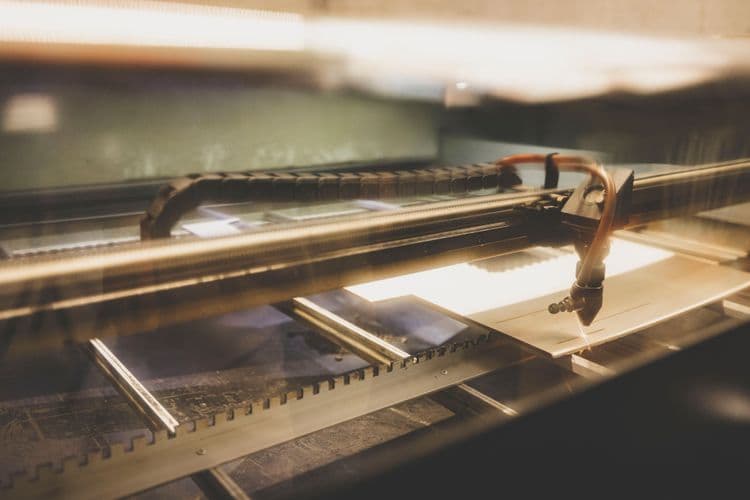
This workshop provides a practical introduction to using a laser cutter as a tool for digital fabrication. After an overview of the machine’s functionality, applications, and safety requirements, participants learn how to create and prepare digital designs for laser cutting. Using vector-based design software, participants create cutting and engraving files before transferring them to the laser cutter and producing their own projects. Alongside the technical fundamentals, the workshop emphasizes creative problem-solving and hands-on experience with modern manufacturing technologies. Participants explore how laser cutting can be applied in areas such as rapid prototyping, product design, education, and customized manufacturing. Example projects include: • Creating a personalized keychain • Designing a custom wood engraving • Manufacturing a small component or prototype • Developing a simple interlocking construction kit
Target: Other

Introduction to CNC Shaper – Digital Woodworking & Computer-Aided Manufacturing
brigk Makerspace/ Germany
This workshop provides a practical introduction to CNC-based manufacturing using a CNC Shaper. Participants learn how the mobile CNC cutting system works and explore its applications in woodworking, product design, prototyping, and maker projects. After an introduction to CNC technology, machine operation, and essential safety procedures, participants create or adapt a digital design and prepare it for machining using CAD and vector-based software. In the practical session, participants manufacture their own project with the CNC Shaper, gaining hands-on experience in material preparation, machine setup, and precision machining. Throughout the workshop, they follow the complete workflow from digital design to finished product. Example projects include: • Creating a personalized wooden sign or logo • Manufacturing a small furniture or design element • Engraving a customized workpiece • Developing a simple prototype
Target: Other
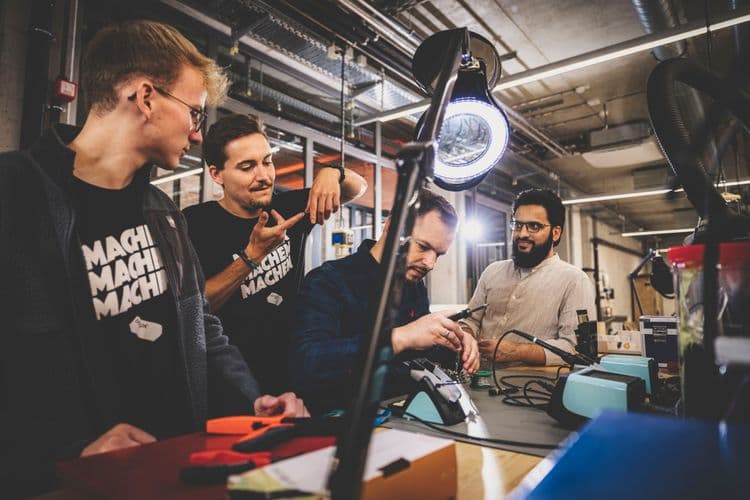
This workshop introduces the principles of Rapid Prototyping by challenging participants to design and build a Rube Goldberg machine. Working in teams, participants transform creative ideas into functional prototypes while applying design thinking and iterative development methods. After an introduction to prototyping concepts, participants plan their chain reaction, define individual process steps, and combine mechanical, physical, and simple technical elements into a complete system. Teams then build, test, and continuously improve their prototypes using a variety of materials and tools. Through repeated experimentation and refinement, participants learn how iteration, collaboration, and creative problem-solving contribute to successful product development. Example challenges include: • Designing a chain reaction that completes a simple task • Combining mechanical, physical, and digital elements • Improving the prototype through multiple testing cycles
Target: Other
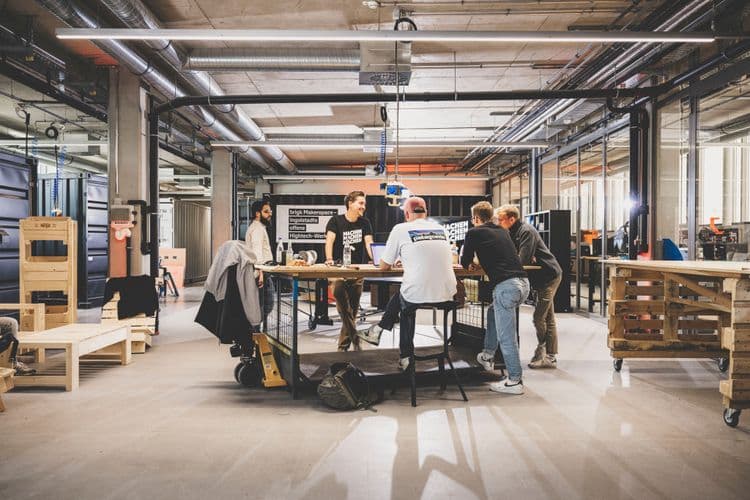
The Hackathon Follow-up Series is designed for winning teams of the Region 10 Hackathon who want to further develop their ideas beyond the competition. Over a minimum of three workshop days, participants receive structured support throughout the product development process. The focus is on transforming an initial concept into a functional prototype or market-ready solution while applying innovation methods and agile project management practices. Working closely with experts, participants refine their ideas using Design Thinking, Lean Startup principles, and Rapid Prototyping techniques. They validate user needs, build and improve prototypes, receive continuous feedback, and define concrete next steps for implementation. The exact agenda is adapted to each team's project status and development goals. Typical workshop structure: Day 1 – Analysis & Concept Development • Review of the existing concept • Identification of target users and customer needs • Refinement of the problem statement and solution • Definition of development objectives Day 2 – Prototyping & Product Development • Development of prototypes or proof-of-concept models • Testing and collecting feedback • Iterative improvement of the solution • Use of makerspace technologies where appropriate Day 3 – Implementation & Pitch Preparation • Development of an implementation roadmap • Definition of milestones and next steps • Introduction to agile project management • Preparation of the final project presentation
Target: University students
Apprentice Innovation Workshop Series – Digital Manufacturing & Emerging Technologies
brigk Makerspace/ Germany
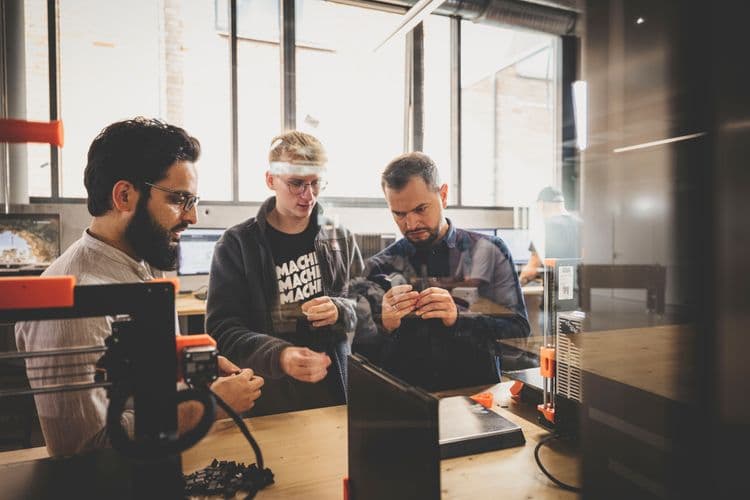
The Apprentice Innovation Workshop Series equips participants with practical skills in digital technologies and innovation processes. Throughout the program, apprentices are introduced to Computer-Aided Design (CAD), 3D printing, laser cutting, embedded electronics and programming, artificial intelligence, and project management. Participants work on a practical innovation challenge that is defined in collaboration with their training companies, ensuring that the learning experience is directly connected to real business needs. Between workshop sessions, participants complete manageable assignments that allow them to deepen their knowledge and further develop their projects. Working in interdisciplinary teams, they apply newly acquired skills to design, prototype, and refine innovative solutions while strengthening collaboration, problem-solving, and communication skills.
Target: Other
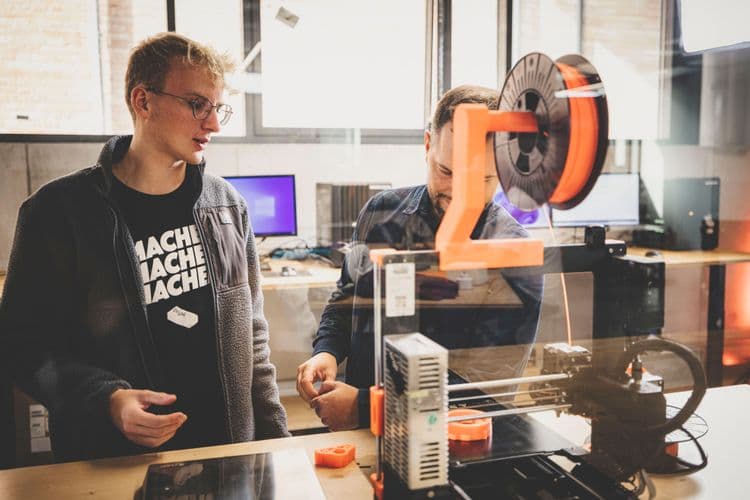
Introduction to 3D Printing – From Digital Design to Physical Prototype
brigk Makerspace/ Germany
This workshop provides a practical introduction to 3D printing as a modern manufacturing technology. Participants learn how additive manufacturing works, where it is used, and what advantages and limitations it offers for prototyping, product development, and customized production. Following an introduction to 3D printing technologies, materials, and safety considerations, participants create or modify a simple 3D model using CAD software. They learn how to prepare models for printing, including slicing, selecting print settings, and understanding how different parameters influence print quality. During the practical session, participants prepare and start their own print while gaining insight into the complete workflow from digital design to finished prototype.
Target: Other