FabLab Zagreb
Fab labs are a global network of local labs.
About FabLab Zagreb
Digital fabrication will change the character of work and the necessary skills, affect economic growth and development through innovation. Every day we are faced with the impact that modern technologies have on our lives, work, leisure entertainment.
Experts
Workshops
Lab Members

Roberto Vdović
Croatia / FabLab Zagreb
Architect and co-founder of FabLab Zagreb
Roberto empowers makers to develop practical skills in digital fabrication, electronics, and design through hands-on workshops, mentoring, and open access to tools like 3D printers and CNC machines. Drawing on his expertise in parametric design and visualization, he connects education with innovation in projects like Maker Faire Zagreb and EU-funded STEM initiatives.
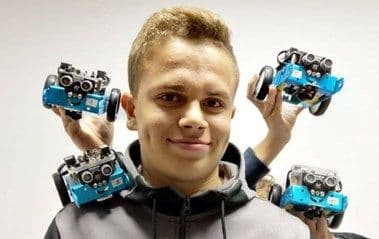
Workshops from FabLab Zagreb
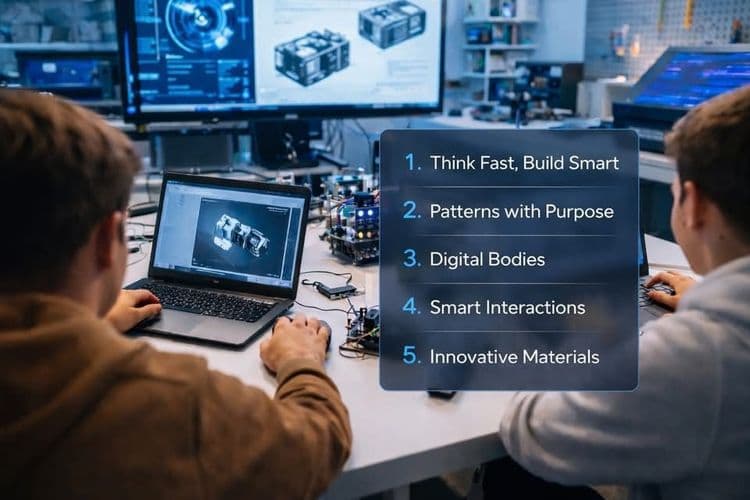
A Future Designing Academy that empowers participants with the creative confidence to drive positive change in remote and urban communities. It integrates all five DiSTT modules (design thinking, 2D patterns, 3D forms, smart interactions, innovative materials) into a single continuous learning journey, complemented by a daily online design-thinking practice through the DiSTT app. A note on the 50-hour duration: this is not simply the sum of the five standalone modules, which each run 16 hours over their own dedicated week (5 × 16h = 80h). Here, each module is delivered in a condensed ~10-hour format, combining in-person sessions with independent work carried out under supervision, all within a single continuous week. In practice, each individual module has been piloted separately as its own full week; the fully integrated 50-hour Academy track itself has not yet been piloted as one continuous week, since participants have not had a full week to dedicate solely to it. The Academy is offered as a deeper, more committed path for those who want to complete the whole arc together, rather than one module at a time.
Target: Unprivileged
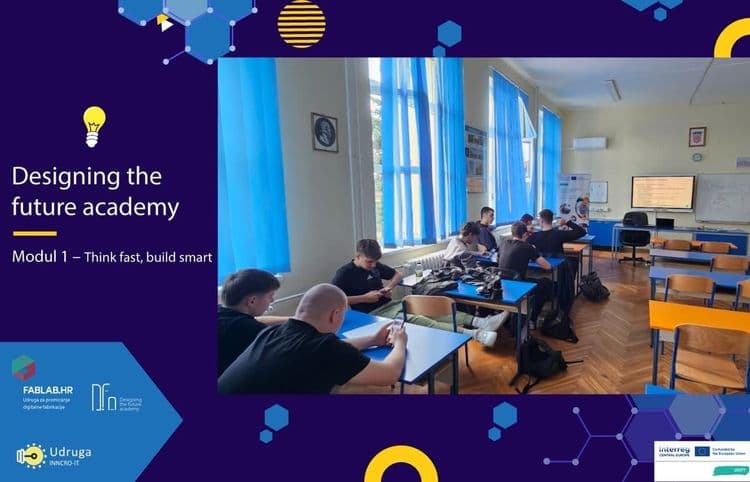
This module guides learners from a recognised real-world problem to a first concept solution. Through the design thinking process — understanding the user and the problem, generating ideas and sketching an initial prototype — participants work in pairs or small teams on a real everyday problem, define the user, goal and solution idea, and build an early mock-up from cardboard or other secondary materials. The workshop is designed as an accessible entry point with no formal prerequisites, built on the principle that the problem being solved always belongs to someone else — a person, a community, or the environment — never to the learner.
Target: Unprivileged
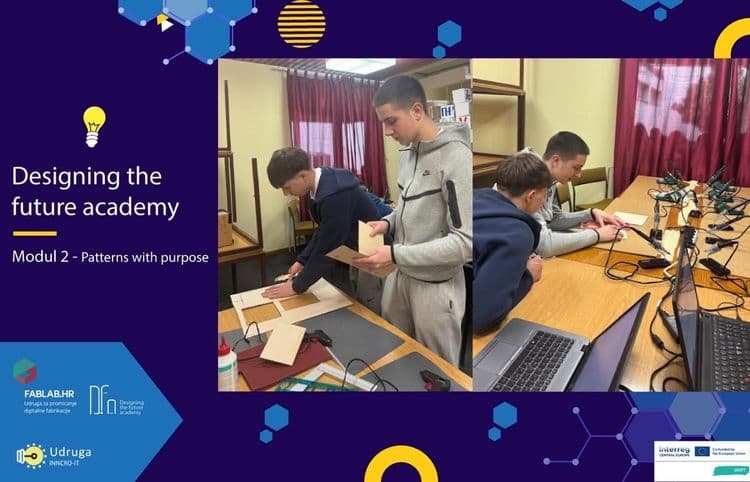
This module explores the difference between 2D and 3D shapes and the aesthetic, informational, structural and visual role of 2D patterns in design and digital fabrication. By assembling pre-cut laser-cut 2D elements into a 3D form, exploring the moiré effect, and working hands-on with a diode laser, students learn vector-file preparation basics, the difference between cutting and engraving, and laser safety procedures. The workshop follows a 'hand before software' principle — an analogue chisel/pyrography exercise always precedes the digital (CNC/laser) equivalent.
Target: Unprivileged
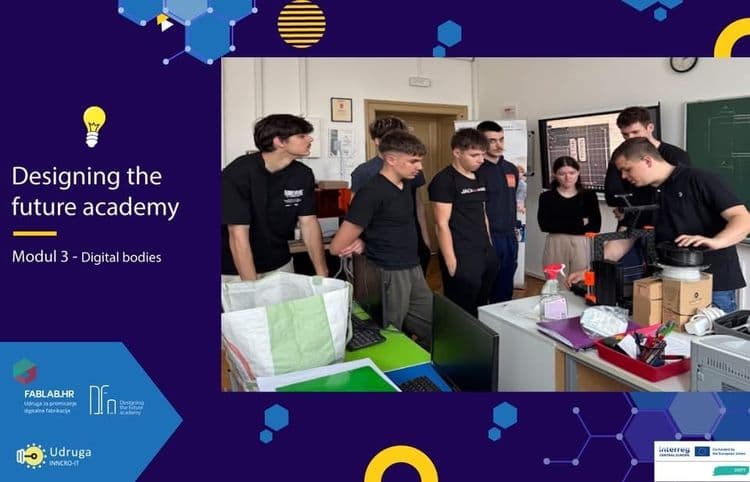
This module introduces students to 3D bodies, 3D technologies, and the basic process of turning an idea into a digital and physical 3D model. Through presentation, demonstration and hands-on work, students learn the difference between 2D and 3D representation, the main groups of 3D technologies (additive, subtractive, forming, digitising), modelling in Onshape, 3D printing and the 3D pen. The same shape is built both by hand (3D pen) and digitally (CAD model, slicing, 3D printer) — so students understand why the digital step exists in the first place.
Target: Unprivileged
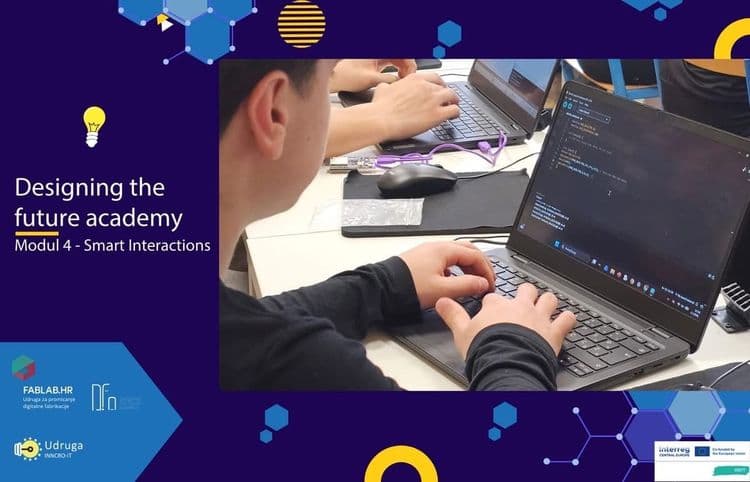
This module introduces students to the basics of DC electricity, electronic components, microcontrollers, sensors, actuators, and programming simple interactive systems. Through a Makey Makey demo, a basic circuit, Ohm's law, and working in a DASDUINO/Arduino environment, students wire circuits on a breadboard, program LEDs and a traffic light, and, in teams, choose a sensor or actuator for an independent project — including description, wiring, code and conclusion — with an increasing role for AI-assisted coding ('vibe coding').
Target: Unprivileged
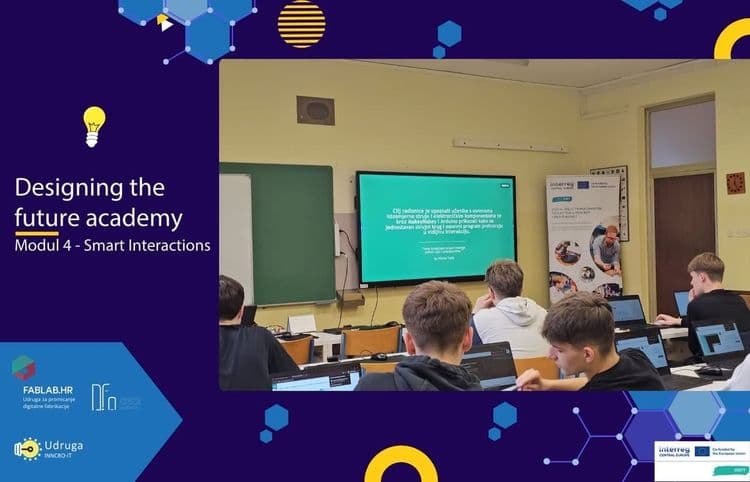
Explore how everyday ingredients and waste can be transformed into sustainable, biodegradable materials. In this hands-on module, students experiment with creating new biomaterials, reusing organic and non-organic leftovers, and discovering the potential of fungi-based, thermochromic, and UV-reactive materials. This module introduces students to basic material properties, recycling, recyclability, and the potential of innovative and smart materials. By reprocessing plastic caps into a new recycled material and demonstrating materials that respond to heat, light/UV or other stimuli (thermochromic, photoactive, shape-memory, heat-shrink), students learn that a material is not just 'what an object is made of' — it shapes a product's function, appearance, safety, durability and sustainability.
Target: Unprivileged
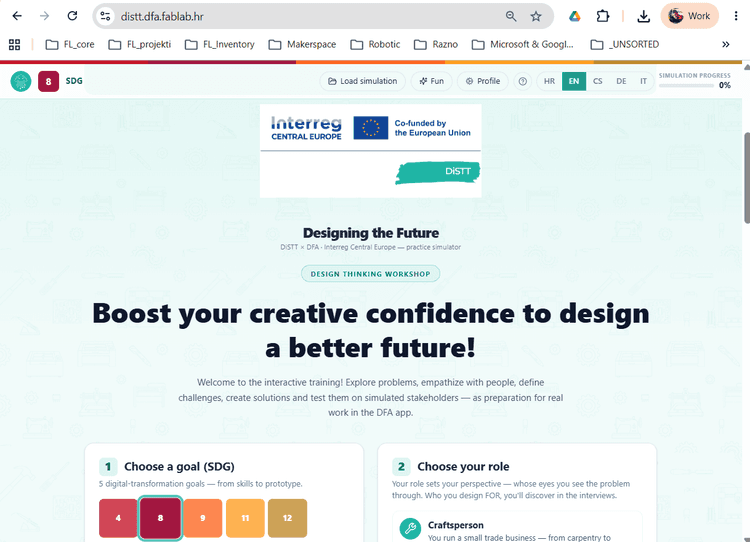
A digital delivery of the SAME design thinking methodology as Module 1, through the DiSTT app (distt.dfa.fablab.hr — a DiSTT-adapted version of dfa-app). Instead of a blank page, AI generates a small fictional community of three stakeholders (a craftsperson, an employee in retraining, a secondary student), each with their own story and problem. The user interviews them through chat and, across 5 short phases, defines the problem, designs a solution and tests it back on them — independently, with no physical material, in short repeatable sessions (e.g. 10 minutes over morning coffee). The goal is not a one-off workshop but building a habit of thinking through repetition (a 3/7/30-day streak system). Actual time depends on personal abailities and short with practice!
Target: Unprivileged